
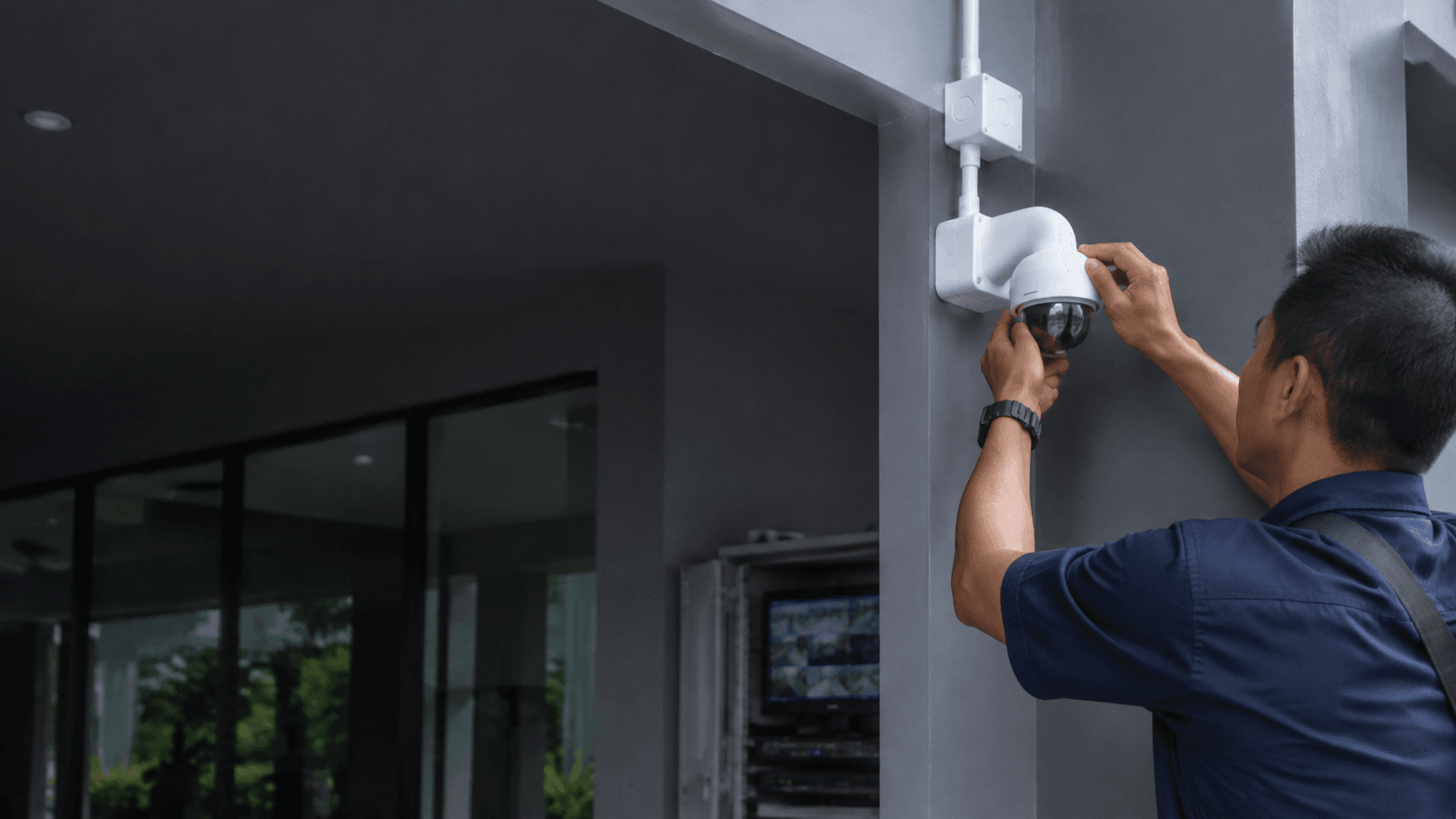
The term small CCTV describes a monitoring setup built around compact camera bodies rather than full-size domes or long bullet housings. The camera itself is only one part of the job. Recording, power, cabling, and the way footage is reviewed all shape whether a compact system works in daily use.
Search interest in small CCTV in Malaysia often comes from owners of terrace houses, shophouses, and small offices who want coverage without bulky hardware on the wall. The practical question is rarely about size alone. It is about whether a compact camera can hold a usable view of the area that matters, in the light that actually exists there.
What Small Cctv Means in Practice
Small CCTV is a description of form factor, not a fixed product category. A compact camera can be a small dome, a short bullet, or a cube-shaped unit. What they share is a smaller housing that draws less attention and fits into corners, ceilings, and narrow walkways where a larger camera would look out of place.
Compact size changes several practical things at once. A smaller housing is easier to position discreetly, but it also offers less room for hardware inside. That affects how the camera handles low light, how it is powered, and how it connects to a recorder. None of those trade-offs can be judged from the size of the camera alone.
A compact camera still needs a clear line of sight to the area being watched. A camera tucked behind a beam or above a doorway may look tidy while missing the very movement it was installed to capture. Placement decisions matter more than the housing dimensions.
Compact Camera Versus Full-Size Camera
A full-size camera usually offers more physical room for its internal components and can be easier to aim over long distances. A compact camera suits shorter, defined views: an entrance, a counter, a corridor, a gate, or a small yard. The right choice depends on the distance to the subject and the amount of light available at that spot.
For many homes and small businesses, a mix works better than a single type. A compact camera can cover a doorway or an indoor counter, while a larger unit handles a longer outdoor run. The system design should follow the coverage need, not a preference for one shape.
Where Compact Cameras Fit in Malaysian Properties
Compact cameras tend to suit properties where the camera must sit close to the area being watched. Common examples include the front door of a terrace house, the counter area of a shop, a small office reception, a back lane entrance, and a covered porch.
Shophouses present a particular case. The frontage is often narrow, the ceiling is low, and the camera needs to cover both the entrance and the walkway without dominating the facade. A compact camera can sit under the awning and still hold a usable view of the door.
Small offices often need coverage of a reception desk, a server corner, or a staff entrance. These are short-range views where a compact camera is a reasonable fit. The same applies to a condominium unit entrance, where a small camera can be mounted without drawing attention from the corridor.
Outdoor use needs more care. A compact camera mounted under an eave is protected from direct rain, but the view may still be affected by glare, headlights, or strong afternoon sun. The position of the sun at different times of day should be considered before the bracket is fixed.
When a Compact Setup Is Not the Right Fit
A compact camera is a poor match for long driveways, wide open compounds, or large warehouse floors where the subject is far from the lens. In those cases, the camera may capture movement without capturing enough detail to be useful. A larger camera or a different lens choice is usually the better answer.
Areas with very low light also need honest assessment. A compact camera may perform well in a lit corridor and poorly in an unlit back lane. The lighting at the actual location, at the actual hour, is the deciding factor.
How Eyonic Plans a Small Cctv Installation
Eyonic's CCTV installation process in Sarawak follows a defined sequence. The same sequence applies whether the job involves a few compact cameras or a larger mixed system.
- Site survey to review the property, the areas to be covered, existing cabling, and available power.
- System proposal covering camera placement, recording, and remote viewing.
- Installation of cameras, recorder, and cabling.
- Handover with a walkthrough of live view, playback, and mobile access.
The site survey is where most of the important decisions are made. It establishes which views are needed, where cameras can be mounted, and how the recorder will be reached. Skipping this step usually leads to cameras that are installed neatly but cover the wrong area.
The proposal then sets out the camera positions and the recording arrangement. This is the point where the number of cameras, the type of each camera, and the storage approach are agreed before any drilling begins.
Installation covers mounting, cabling, and configuration. Cabling routes are chosen to keep the installation tidy and to avoid runs that are exposed to damage. The recorder is set up and the cameras are aligned to their intended views.
Handover is where the system becomes usable. Live view, playback, and mobile access are demonstrated so the people who rely on the system know how to check it. A system that nobody can operate confidently is not doing its job.
Project Experience in Kuching
Eyonic completed a project for the Kuching Immigration Office, focused on arrival flow, staff areas, visitor movement, and dependable daily operation. That kind of work places a premium on camera positions that stay useful through a full working day, not just at the moment of installation.
Eyonic also completed a project for KTA Sarawak Sdn Bhd, an engineering consultancy, covering a practical office setup in Kuching to support staff movement, visitor handling, tidy cabling, and clearer daily site control. Both projects show the same pattern: the coverage plan comes first, and the hardware follows.
Lighting Placement and Daily Operation
Lighting is the single most common reason a compact camera disappoints. A camera that looks fine in daylight may struggle after dark if the area has no consistent light source. Eyonic recommends checking actual lighting conditions before confirming placement for ColorVu-style cameras, because the real conditions on site decide whether the camera can hold a usable image.
Placement follows from that check. A camera aimed at a doorway should see faces as people approach, not the tops of heads as they pass underneath. A camera covering a counter should sit high enough to avoid being blocked by stock or equipment, but low enough to capture the transaction area.
Motion detection is a useful feature but it needs realistic expectations. Movement from trees, passing traffic, or shifting shadows can trigger recordings that have nothing to do with security. Careful aiming reduces false triggers more effectively than any setting.
Remote viewing lets the system be checked from a phone. That is useful for confirming a delivery, checking whether a gate was left open, or reviewing an alert. It depends on a working internet connection at the property, so the network arrangement should be confirmed during the survey.
Night vision performance varies with the camera and the site. Rather than assuming a result, the practical approach is to test the intended position under the lighting that exists there. Where light is genuinely poor, adding a light source or choosing a different camera position is often more effective than changing settings.
What to Compare Before Choosing
Compare coverage first. The number of cameras and their positions determine what the system can actually see. A smaller number of well-placed cameras usually beats a larger number of poorly placed ones.
Compare the recording arrangement next. Recording happens either at a recorder on site or through another storage method, and the choice affects how footage is reviewed and how long it is kept. The right answer depends on how far back the property needs to look.
Compare the operating routine last. Whoever checks the system should be able to open the live view, find a past recording, and understand an alert without assistance. That is the part of the system that gets used every day.
Practical Next Step
Small CCTV works best when the coverage plan is settled before the cameras are chosen. For properties in Sarawak, that means a survey of the actual site, an honest look at the lighting, and a placement plan that matches the areas that matter.
Eyonic supplies and installs CCTV and ELV systems for homes, offices, shops, and industrial sites in Sarawak, with planning, supply, and installation handled as one job. The Hikvision CCTV Package is listed at RM 1,599, covering camera supply and setup, basic recording configuration, and mobile viewing handover.
Share your location, property type and required system with Eyonic on WhatsApp at +60 11-5111 7959 for the next practical step.