
The exact-match query hik dvr is short, but the decision behind it is not. A recorder determines how many cameras a site can run, how long footage stays available, and whether anyone can actually review an incident after it happens. This page explains what the recorder does, how it fits into a working CCTV system, and how a Sarawak installation is surveyed and handed over.
What a Hik Dvr does in a working CCTV system
A Hik Dvr is the recording and playback unit at the centre of a wired camera system. Cameras send video to the recorder, the recorder writes that video to an internal hard drive, and the recorder also feeds live pictures to a monitor and, once configured, to a phone app.
The recorder is not a camera and not a monitor. It is the box that keeps the footage. Remove it and the cameras still show live images, but nothing is stored for later review.
Three jobs sit with the recorder:
- Site survey — Eyonic reviews the property, camera positions, cabling routes and lighting conditions before anything is confirmed.
- System proposal — the recorder, camera types, storage and viewing setup are proposed as one working system rather than separate parts.
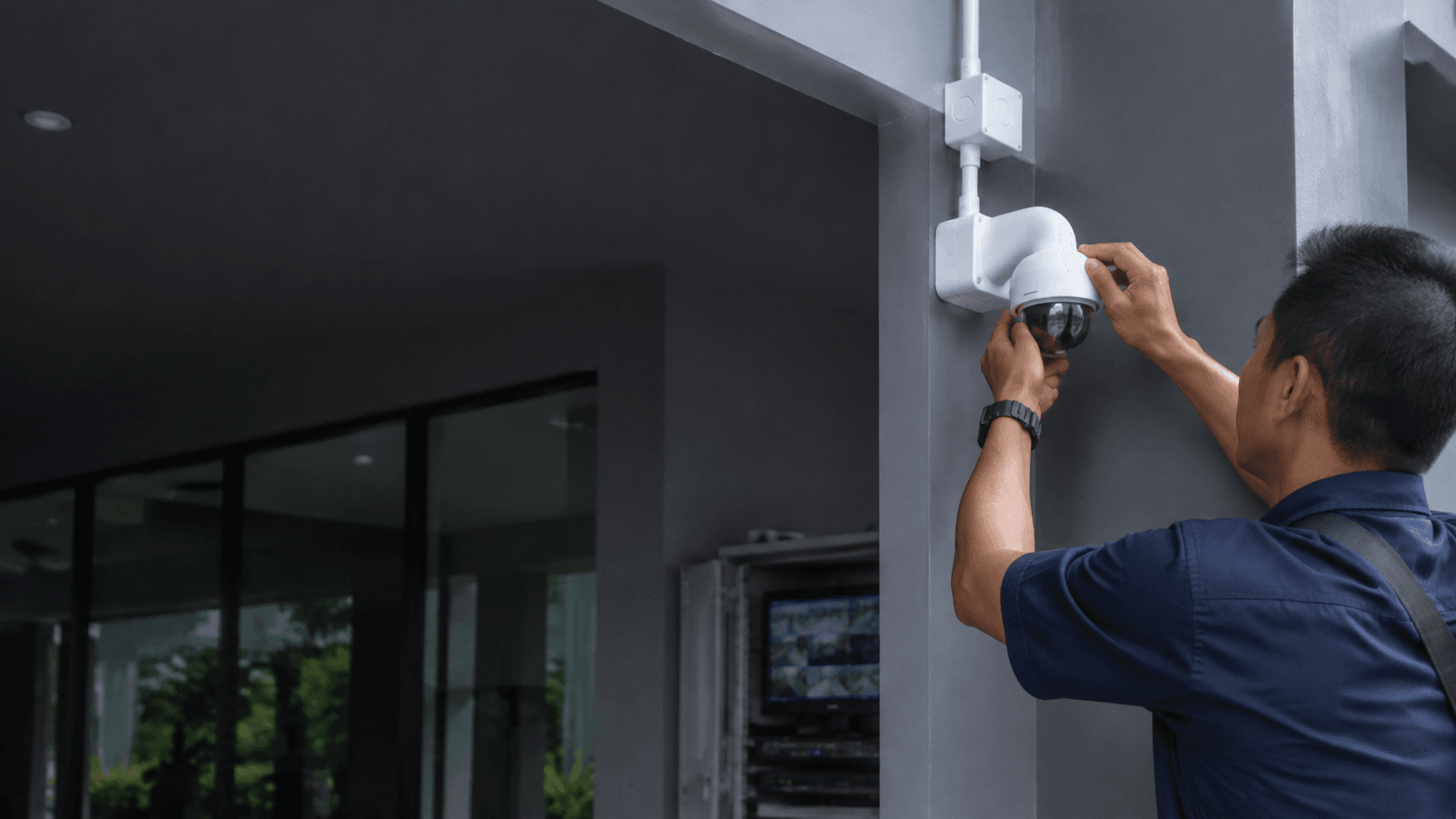
- Installation — cameras, cabling, recorder and configuration are installed and tested on site.
- Handover — recording, playback and mobile viewing are demonstrated so the system is usable from day one.
That sequence comes from Eyonic's published CCTV installation process, and it matters because a recorder chosen before the survey can end up with too few channels, too little storage, or camera positions that miss the area that needed covering.
Where the recorder sits relative to the cameras
Wired cameras connect back to the recorder, which is why cabling routes and recorder location are decided together. A recorder placed in a room with no practical cable path adds cost and untidiness later. Eyonic's KTA Sarawak Sdn Bhd project in Kuching covered staff movement, visitor handling and tidy cabling, which shows how much of the outcome depends on routing rather than the box itself.
Channel counts, camera types and recording formats
Channel count is the number of cameras a recorder can accept. A four-channel unit runs four cameras, an eight-channel unit runs eight, and larger units run more. The practical rule is to count the cameras the site needs now, then check whether the recorder can take one or two more without replacement.
Camera type matters because not every camera works with every recorder. Hikvision publishes separate DVR and NVR product lines, and the two are not interchangeable: a DVR is built around wired analogue-style cameras, while an NVR is built around network cameras. Buyers searching hik dvr are usually working with an existing wired camera set or a site where wired runs are already practical.
Recording format affects how much footage fits on a drive. Compression reduces file size so more days of video fit into the same storage, and newer compression standards generally store more footage than older ones at similar picture quality. The exact format supported depends on the specific recorder model, so it should be confirmed against official Hikvision documentation for that model rather than assumed from the product family.
Matching the recorder to the site
A small shop with four cameras at the entrance, counter and rear store has different needs from a public office with arrival flow, staff areas and visitor movement. The Kuching Immigration Office project is an example of the second kind: the requirement was dependable daily operation across several distinct areas, not simply a higher camera count.
Two constraints usually decide the channel count. The first is how many areas genuinely need coverage. The second is whether any of those areas need more than one camera angle. A single entrance may need one camera; a loading bay with two approaches may need two.
Storage, playback and remote viewing in daily use
Storage is the part most often underestimated. Footage retention depends on the number of cameras, the recording resolution, the compression in use, and whether recording runs continuously or only on motion. A recorder with an undersized drive still works, but it overwrites older footage sooner than expected.
Playback is the reason storage exists. When something happens, someone needs to find the relevant clip quickly. That depends on the recorder being configured with sensible recording schedules and on staff knowing how to search by date, time and camera.
Remote viewing lets footage and live pictures be checked from a phone. It depends on the recorder being configured correctly and on the site having a workable internet connection. Remote viewing is a convenience layer, not a replacement for on-site recording, and it should be tested during handover rather than assumed to work.
Lighting and camera placement
Placement decisions should follow the actual lighting at the site. Eyonic's guidance on ColorVu-style cameras is to check real lighting conditions before confirming placement, because a position that looks adequate in daylight can behave differently at night. The same principle applies to any camera feeding a recorder: the recorder stores what the camera sees, so a poorly placed camera produces well-stored footage of the wrong area.
Site survey installation and handover in Sarawak
For buyers in Kuching and elsewhere in Sarawak, the recorder is only one part of a delivered system. Eyonic plans, supplies and installs monitoring systems with camera placement, recording and remote viewing for homes, offices, shops and industrial sites.
The survey stage establishes what needs covering, where cameras can physically go, how cables will run, and where the recorder will sit. The proposal stage turns that into a defined system. Installation covers mounting, cabling, recorder setup and configuration. Handover covers recording, playback and mobile viewing so the people using the system know how it behaves.
Eyonic's founder, Eric Yong, has worked in the industry for more than ten years, with experience in technical installation of digital security solutions for commercial businesses in Sarawak. That experience is most useful at the survey stage, where placement and cabling decisions are made.
What a DVR based job typically involves
A DVR-based installation usually means wired cameras running back to a central recorder, a hard drive sized for the required retention, a monitor or viewing point, and mobile viewing configured for the people who need it. The exact camera models, recorder model and drive capacity depend on the site, and those details should be confirmed in the proposal rather than assumed from a product listing.
Practical checks before confirming a setup
Several checks prevent the most common disappointments.
Confirm the channel count against the real camera list, including any camera added later. Confirm the storage capacity against the retention the site actually needs, not a round number. Confirm that the chosen cameras and the chosen recorder are compatible, using official Hikvision documentation for both. Confirm where the recorder will sit and how cables reach it. Confirm that remote viewing works on the site's internet connection before handover. Confirm who will review footage and whether they have been shown how.
On cost, Eyonic publishes a Hikvision CCTV Package at RM 1,599 covering camera supply and setup, basic recording configuration and mobile viewing handover. That package is not confirmed to be DVR-based, so it should be treated as a starting reference rather than a DVR quotation. Larger commercial work sits in a different range: Eyonic's Kuching Immigration Office project had an approximate budget of RM 12,000 to RM 28,000, and the KTA Sarawak Sdn Bhd project had an approximate budget of RM 8,000 to RM 18,000.
Two limits are worth stating plainly. Hikvision DVR model numbers, channel counts, resolution limits, compression formats and storage capacities vary by model and must be verified against official Hikvision documentation for the specific unit. Warranty and after-sales terms for DVR hardware should also be confirmed directly rather than assumed.
Share your location, property type and required system with Eyonic on WhatsApp at +60 11-5111 7959 for the next practical step.