
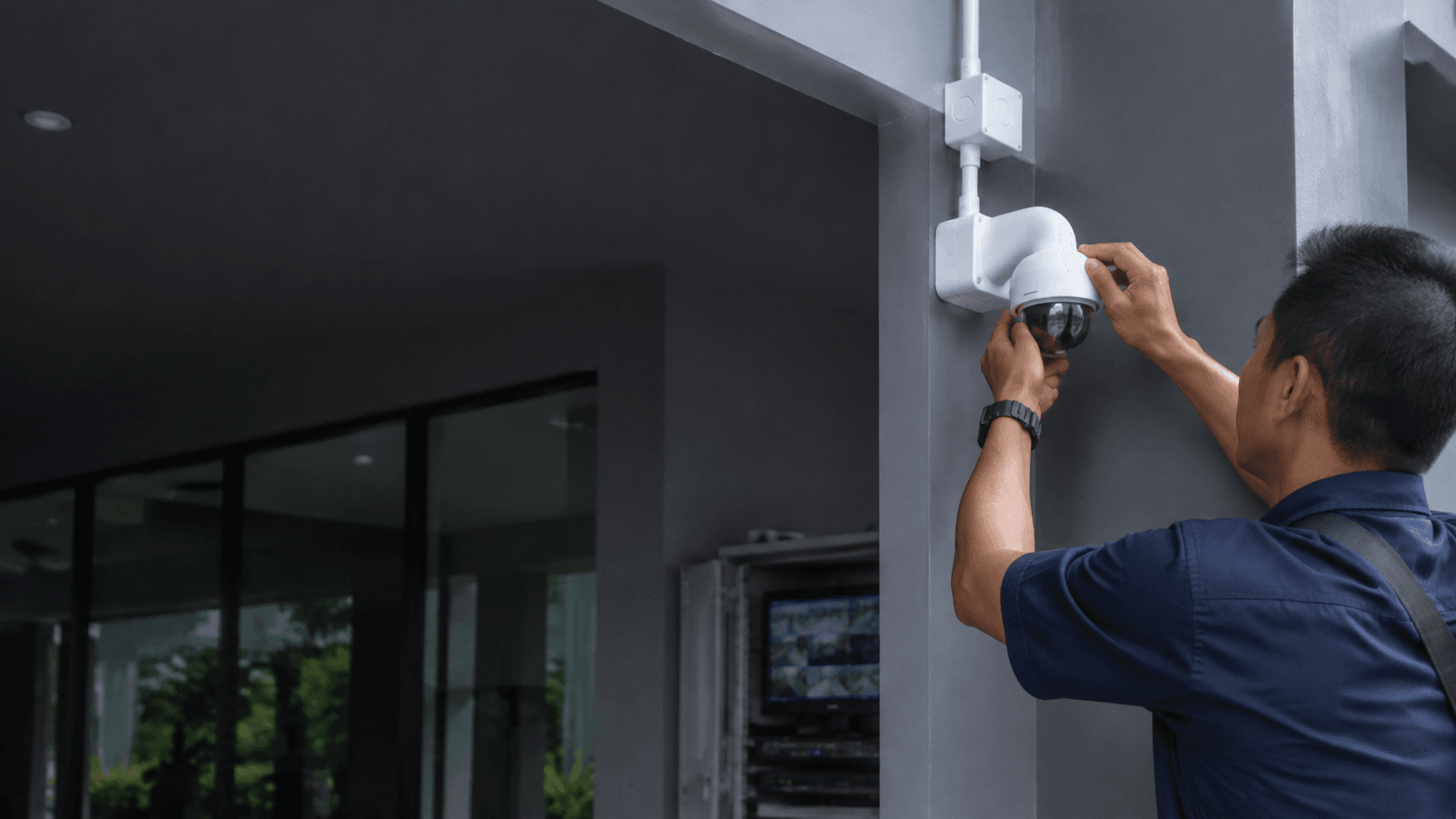
The exact-match query wyze security describes a consumer ecosystem rather than a single product. Wyze sells cameras, doorbells, locks, lighting, and sensor kits that share one app, and the company also sells subscription service plans that unlock premium app features and 24/7 home monitoring. Readers in Malaysia researching wyze security are usually weighing whether a low-cost, app-driven system is dependable enough for a home, shop, or small office, and what has to be verified locally before money changes hands.
What Wyze Security includes across cameras, sensors, locks, and monitoring
The product line splits into four practical groups. Cameras cover indoor, outdoor, battery, solar, floodlight, and pan-tilt models, with the manufacturer describing video quality ranging from 1080p to 4K and motion detection with alerts. Video doorbells handle entry points and two-way conversation. Smart locks cover keyless entry, including bolt-style and palm-reader models. Sensors and alarm hardware cover entry, motion, climate, and leak detection, paired with a hub and keypad.
Monitoring sits on top of that hardware as a service layer. Wyze sells service plans that unlock premium app features, and a separate home monitoring service that adds professional oversight. The hardware works without a subscription for basic viewing and alerts; the subscription changes what the app can detect and how events are handled.
Cameras and doorbells
Camera choice usually comes down to power and placement. Battery and solar models avoid cabling but depend on charge cycles and sunlight. Plug-in and floodlight models need a power source at the mounting point. Pan-tilt models cover a wider arc from one position, which suits a corridor or a shop floor better than a fixed lens. Doorbells sit at the entry and combine a camera with a call button, so they serve both observation and visitor handling.
Sensors, locks, and alarm hardware
The Sense range covers entry sensors for doors and windows, motion sensors for interior zones, climate sensors, leak sensors with probes, and a keypad for arming and disarming. A hub ties the sensors together. Smart locks handle the door itself, and the manufacturer's own guidance notes that lock selection depends on door condition, user roles, and a backup entry method — a point that applies to any brand, not just this one.
How Wyze Security devices work together in one app
The app is the control layer. Cameras stream live video and push motion alerts; sensors report state changes to the hub; locks report lock and unlock events; automations let one event trigger another, such as a sensor opening a camera recording or a light switching on. The manufacturer markets this as a system where devices work together rather than as isolated gadgets.
Two practical consequences follow. First, the app becomes a single point of failure for convenience — if the phone, account, or internet connection is unavailable, remote control is unavailable, even though local recording and local alarms may continue. Second, automations are only as reliable as the weakest device in the chain, so a sensor with a weak signal or a camera with unstable Wi-Fi can break a routine that looks fine on paper.
Account security is part of the system
The manufacturer publishes a security and trust page covering account protection, two-factor authentication, encryption of live streams and event video, a vulnerability disclosure programme, and a bug bounty programme. Independent testing has also been applied to the platform: the New York Times' Wirecutter hired a security researcher to test the company's devices after earlier incidents, and published the results. That combination — vendor documentation plus third-party testing — is the right way to judge platform security, because vendor claims alone are not verification.
Wyze Security plans and what changes when monitoring is added
Without a plan, the hardware still records, streams, and alerts. With a service plan, the app gains premium detection features such as person and vehicle filtering, which reduces nuisance alerts from passing traffic or moving foliage. With the home monitoring service, events can be escalated to a monitoring centre rather than only to a phone.
The trade-off is straightforward. Subscription features improve signal quality and response, but they also create a recurring cost and a dependency on the vendor's cloud. A household that wants alerts only when a person enters a specific zone will notice the difference immediately; a household that only wants to review footage after an incident may not need the plan at all.
Pricing, plan terms, contract length, and cancellation conditions for Malaysia were not supplied for this article, so those figures should be confirmed directly with the seller or the manufacturer before any commitment. The same applies to local availability, warranty coverage, and support arrangements.
What to check before choosing for a Malaysian property
Malaysian conditions change the calculation. Lightning and surge activity, monsoon rain, high humidity, and inconsistent broadband in some areas all affect how a cloud-dependent, app-driven system performs. A camera that works well in a dry, temperate market may need different mounting, cabling, and surge protection here.
Local practice matters too. Eyonic, a Sarawak-based security system supplier, runs a CCTV installation process built around site survey, system proposal, installation, and handover, and has completed projects including the Kuching Immigration Office, where the focus was arrival flow, staff areas, visitor movement, and dependable daily operation. That sequence — survey first, then proposal, then installation, then handover — is the same discipline any smart-home security purchase benefits from, regardless of brand.
- Confirm the property type and what actually needs watching: entry points, perimeter, shop floor, or a mix.
- Check power and network at each proposed mounting point, including whether a socket or PoE run is available.
- Test Wi-Fi signal strength at the furthest camera position, not just next to the router.
- Review lighting conditions at each position before confirming placement, since night performance depends on the light actually present.
- Decide whether recording should be local, cloud, or both, and confirm storage and retention terms in writing.
- Confirm who handles installation, configuration, and handover, and what happens if a device fails.
- Verify local availability, warranty terms, and support contact before payment.
- Plan a backup entry method for any smart lock, and test it before relying on the lock daily.
Where a local integrator fits
Off-the-shelf smart-home kits suit renters, small homes, and owners who want to install and manage devices themselves. Larger properties, shops, and offices usually need camera placement planning, tidy cabling, recording configuration, and a handover that leaves someone on site able to use the system. Eyonic supplies and installs CCTV and ELV systems for homes, offices, shops, and industrial sites in Sarawak, with packages starting at RM 1,599 for a Hikvision CCTV package, an alarm system, or an autogate package. For a property that needs a surveyed, installed, and handed-over system rather than a self-installed kit, that route is worth comparing against a DIY purchase.
questions readers ask before buying
Does work without a subscription
Yes for basic use. Cameras stream, record to local storage where supported, and send motion alerts without a plan. Premium detection features and professional monitoring require a subscription.
Is available in Malaysia
Local retail availability, distributor support, and warranty coverage for Malaysia were not confirmed in the evidence used for this article. Buyers should verify the seller, the warranty route, and the returns process before ordering, especially for cross-border purchases.
Can devices integrate with an existing CCTV or alarm system
Compatibility between this ecosystem and an installed system was not confirmed in the available evidence. Treat them as separate systems unless a supplier confirms integration in writing, and expect separate apps unless proven otherwise.
What is the biggest risk with a low cost smart home system
Not the hardware price — the dependency. Cloud features, app control, and subscription detection all rely on the vendor staying in business, keeping servers running, and maintaining security. Independent testing and a published vulnerability disclosure programme are reasonable signals; marketing claims are not.
For a Malaysian property that needs a surveyed installation with defined handover, share the location, property type, and required system with Eyonic on WhatsApp at +60 11-5111 7959.