
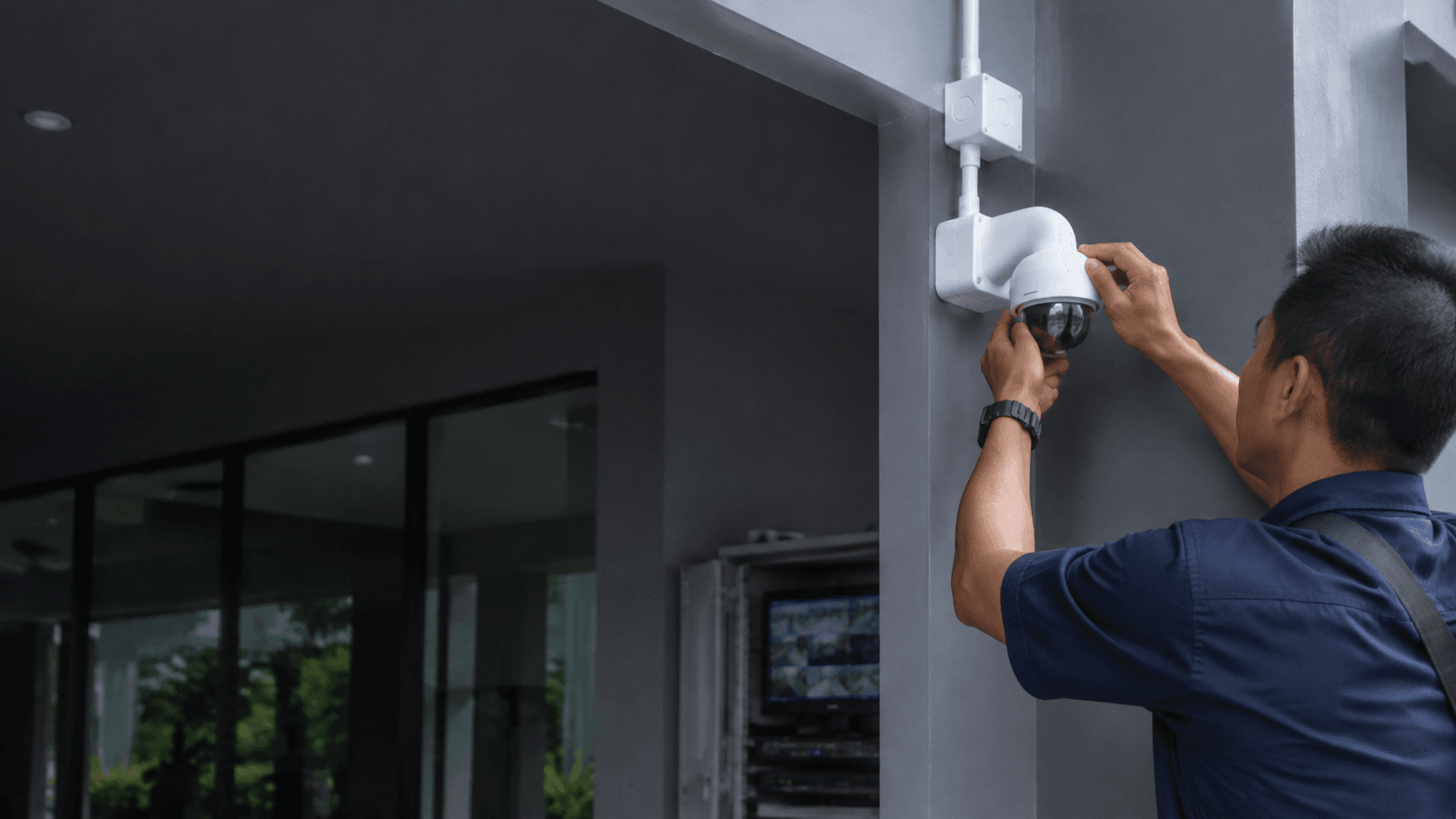
The equipment is rarely the hard part. What decides whether a home system is useful is where each camera sits, what the light does at that spot through the day, and how recording and remote viewing are configured before anyone relies on the footage. Eyonic Sdn Bhd plans, supplies and installs monitoring systems with camera placement, recording and remote viewing for homes, offices, shops and industrial sites across Sarawak.
What Indoor Cameras For Home Are Used For
Indoor cameras for home use cover the inside of a property rather than the perimeter. In practice that means entry halls, living areas, corridors, stairwells, and rooms holding equipment or valuables. The purpose is usually one of three things: seeing who came in and when, checking on a space while away, or keeping a record that can be reviewed after an incident.
Two operating choices shape everything else. The first is whether the camera runs on mains power or batteries, which affects where it can physically go. The second is whether footage is stored on a recorder on the premises or in a cloud service, which affects both running cost and what happens during an internet outage. Neither choice is settled by the camera alone; both depend on the property.
Homes differ from the office and public-building work Eyonic has completed, such as the Kuching Immigration Office project covering arrival flow, staff areas and visitor movement. A house has fewer people, more varied room use, and far less tolerance for visible cabling. That difference is why placement decisions for indoor cameras for home use should be made on site rather than from a product listing.
Lighting and Placement Checks Before Confirming a Position
Eyonic recommends checking actual lighting conditions before confirming placement for ColorVu-style cameras. A position that looks correct on a floor plan can fail in practice because of a bright window behind the subject, a lamp that switches off at night, or a corridor that is darker than it appears during a daytime visit.
Three conditions change the result most often:
- Backlight. A camera facing a window or glass door records a bright rectangle and a dark interior. Moving the camera to the side of the light source usually fixes more than any setting change.
- Night light sources. Rooms lit by a single lamp, a television, or a hallway glow behave differently after dark than during a survey. The check has to happen in the conditions the camera will actually record in.
- Coverage versus detail. A wide view of a whole room identifies movement but rarely faces. A tighter view of a doorway identifies people but misses the rest of the room. Most homes need both, which is a placement decision, not a camera decision.
Placement also has practical limits. Ceiling height, the direction of existing power points, and whether a cable route can be hidden all constrain where a camera can go. A position that needs a long surface-run cable may be rejected for reasons that have nothing to do with image quality.
How a Supply-and-Install Process Runs From Survey to Handover
Eyonic's CCTV installation process includes site survey, system proposal, installation, and handover. The sequence matters because each stage removes a decision that would otherwise be guessed.
- Site survey. The property is reviewed for camera positions, lighting conditions, power availability and cable routes before any equipment is confirmed.
- System proposal. The survey findings become a proposed system covering camera positions, recording configuration and remote viewing.
- Installation. Cameras are mounted, cabling is run, and the recorder is set up.
- Handover. Recording and mobile viewing are configured and explained so the system can be operated day to day.
The survey stage is where most disagreements get resolved cheaply. If a household wants a camera covering a front door from inside, the survey shows whether the glass, the light and the distance allow it. If the answer is no, the proposal changes before installation rather than after.
Eyonic's published packages start at RM 1,599 for a Hikvision CCTV package covering camera supply and setup, basic recording configuration and mobile viewing handover. The same figure applies to the Hikvision alarm system and the autogate package. These are package starting points, not a quotation for a specific house, because the number of cameras and the cable routes vary by property.
Recording, Remote Viewing and Daily Operation
Recording configuration decides how far back footage can be reviewed, and that depends on how many cameras run, how they are set to record, and how much storage the recorder holds. A system set to record continuously fills storage faster than one set to record on motion. Neither setting is universally correct; a household that wants a complete record accepts shorter retention, while one that wants a long history accepts gaps.
Remote viewing depends on the home internet connection as much as the camera system. Mobile viewing handover is part of Eyonic's package scope, which means the app is set up and demonstrated rather than left to the buyer. The practical questions at handover are which devices will view the feed, whether more than one person needs access, and what happens when the connection drops.
Daily operation is where indoor cameras for home use either become routine or get abandoned. A system that sends an alert for every passing shadow gets muted within a week. A system that records clearly and is checked occasionally keeps working. That outcome is set during configuration, not purchased with the camera.
Indoor Cameras For Home. Practical Next Step
The useful starting information is the property location, the property type, and what the system needs to cover. With those three details, a survey can be scoped and a proposal built around the actual rooms rather than a generic package.
Eyonic is based in Sarawak and works across homes, offices, shops and industrial sites. Share the location, property type and required system with Eyonic on WhatsApp at +60 11-5111 7959 for the next practical step.