
The term is used loosely online, and that looseness matters. A search for mobile cctv can land on an Android app that turns an old phone into a camera, a solar trailer parked at a construction site, or a dash-style camera wired into a vehicle's electrical system. Each option solves a different problem, and the trade-offs between them are real.
This guide separates those categories, explains what each one actually does, and sets out the practical checks that decide whether a given setup holds up in daily use.
Mobile Cctv. What Matters Before Choosing
Three variables decide almost everything: whether mains power and broadband exist at the camera location, whether the footage needs to survive the loss of the camera itself, and whether anyone will watch the feed in real time.
A phone-based app fails the first test the moment the phone battery dies or the Wi-Fi drops. A solar trailer with cellular backhaul is built for exactly that scenario, which is why rental fleets market them for work zones and yards. A vehicle-mounted camera sits between the two: it has power from the vehicle but usually records locally rather than streaming continuously.
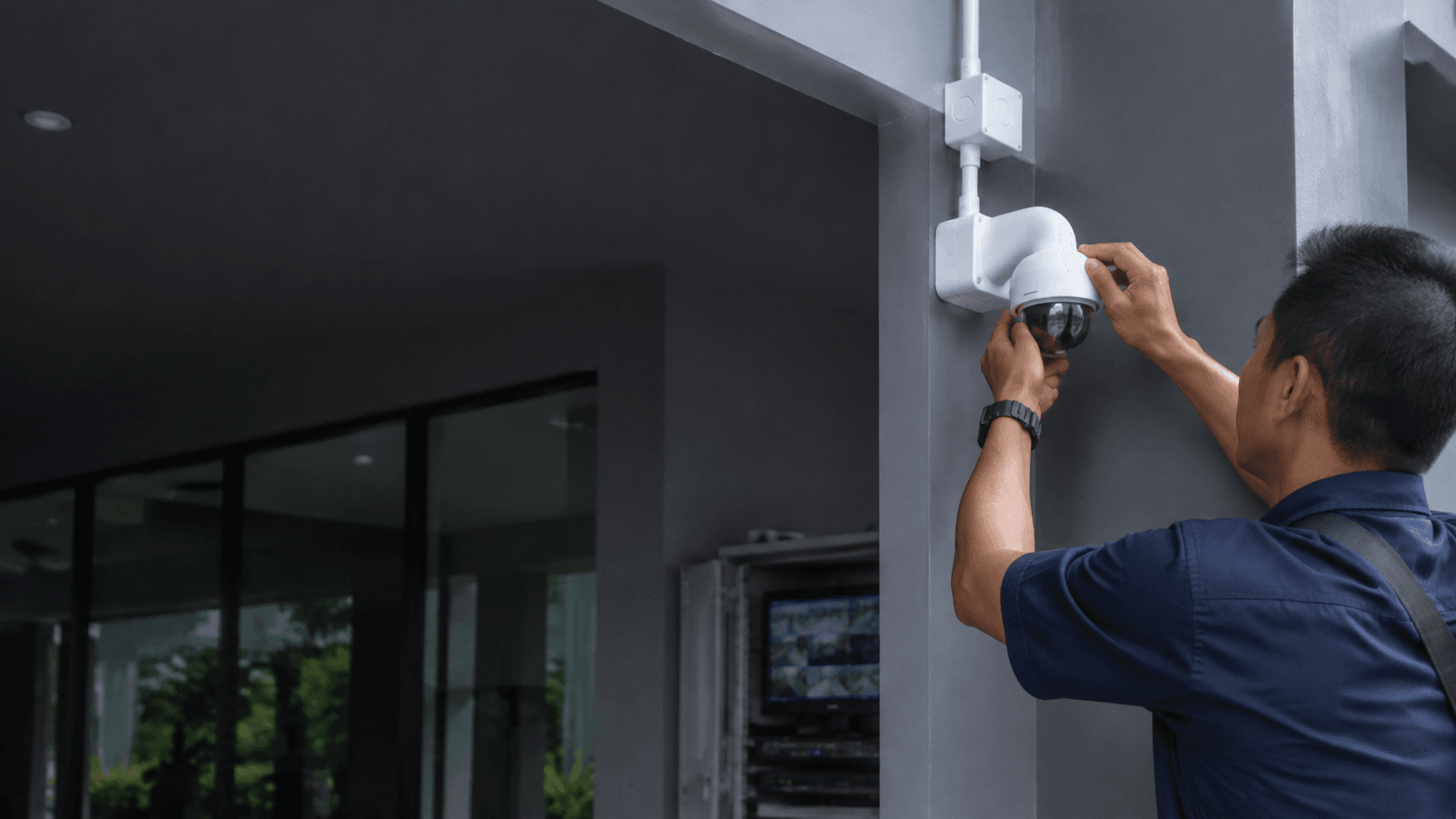
Eyonic's own installation process begins with a site survey and a system proposal before any hardware is mounted, which reflects the same logic — placement and power come before product choice.
What Is Mobile Cctv?
Mobile cctv is surveillance that is not fixed to one wired location. That covers software that repurposes a smartphone as a camera, hardware designed to run on vehicle battery power and withstand vibration, and self-contained trailers that carry their own power, connectivity and recording.
The common thread is portability or temporary placement. The differences sit in power source, connectivity, recording location and who monitors the result.
Phone-as-camera apps
Camy — Live Video CCTV is described on Google Play as turning phones into a live stream video surveillance system. Its listed topics include motion detection, cloud video recording, two-way audio, night mode and remote camera control. The appeal is cost and speed; the constraint is that the phone is now both the camera and a single point of failure.
Vehicle and portable camera hardware
Cortex Security markets mobile and portable cameras designed to run on a vehicle's battery power, work across a wide temperature range and withstand vibration. That specification set points at a different job: recording from a moving or parked vehicle rather than monitoring a fixed room.
Self-contained surveillance trailers
Street Smart Rental describes solar-powered mobile surveillance camera trailers with 24/7 video monitoring for work zones, job sites and yards, available for rent or purchase. These units bundle power, connectivity and cameras into one deployable asset, which is why they appear in construction and temporary-site contexts.
Choosing the Right Mobile Cctv Setup
Work through the sequence below in order. Each answer narrows the field before the next question is asked.
- Confirm whether mains power and a network connection exist at the camera position. If neither does, phone apps and standard wired cameras drop out immediately.
- Decide whether footage must survive theft or damage to the camera. Local-only recording on a device that can be carried away offers no protection in that scenario.
- Establish who watches the feed. Continuous human monitoring, automated alerts and after-the-fact review are three different requirements with three different cost profiles.
- Check the environment. Temperature range, vibration, dust and lighting conditions all constrain which hardware is suitable.
- Confirm how long footage must be retained, and where it is stored.
- Verify the installation and handover process, including who configures remote viewing and tests it.
Eyonic's published process follows a comparable shape — site survey, system proposal, installation, then handover — and the company advises checking actual lighting conditions before confirming placement for ColorVu-style cameras, since low-light performance depends on the real scene rather than the datasheet.
Camy Live Video CCTV and the App Category
The app route is the cheapest entry point and the most fragile. Camy's Google Play listing covers live video, motion detection, cloud recording, two-way audio and remote control, with support for Android TV and web browser access. Those features are genuinely useful for watching a room, a pet or a doorway.
The limits are structural rather than incidental. A phone running as a camera competes with itself for battery, heat and network stability. If the device is removed, the recording stops. Cloud storage depends on an active connection. For a temporary check on a small space, that trade-off is reasonable. For anything that must keep recording unattended for weeks, it is not.
A separate app category exists for the reverse use case: CCTV Camera Video Recorder markets background video recording with the phone screen locked, aimed at capturing video from the phone itself rather than monitoring a remote camera. The naming overlap between these two functions is a common source of confusion.
Practical Considerations for
Power, connectivity, storage and monitoring are the four constraints that decide whether a deployment works past the first week.
| Setup type | Power source | Typical constraint | Best fit |
|---|---|---|---|
| Phone-as-camera app | Device battery | Stops recording if the device is removed or loses connection | Temporary monitoring of a small indoor space |
| Vehicle-mounted camera | Vehicle battery | Requires tolerance for vibration and temperature swings | Recording from a vehicle, parked or moving |
| Solar surveillance trailer | Onboard solar and battery | Higher cost; deployment logistics and site positioning | Work zones, yards and sites without mains power |
Storage location deserves separate attention. Local recording on an SD card or onboard drive keeps working without a network but disappears with the device. Cloud or remote storage survives device loss but depends on connectivity and, in most cases, an ongoing subscription. Neither is universally better; the choice follows from what the footage is meant to prove.
Monitoring is the other fork. Automated motion alerts suit sites where nobody is watching continuously. Central monitoring with dispatch suits sites where a response is expected. Self-monitoring through a cloud video management system suits operators who want to review footage themselves. These are different services, not tiers of the same one.
Where fixed CCTV still wins
Mobile cctv is not a replacement for a permanent installation. Where power and network are stable and the area to cover does not change, a fixed system with planned camera placement, NVR setup and remote viewing is simpler to run and easier to maintain. Eyonic's work for the Kuching Immigration Office focused on arrival flow, staff areas, visitor movement and dependable daily operation — a fixed-site brief rather than a portable one.
Portable options make sense when the location changes, when power is absent, or when the requirement is temporary. When none of those apply, the mobile premium buys nothing.
Making an Informed Choice About
The decision usually comes down to one question: does the camera need to move, or does it need to keep running unattended? Movement points toward vehicle-mounted hardware or trailers. Unattended reliability points toward a fixed installation with proper power and recording.
Where a portable setup is genuinely required, the checks that matter most are power autonomy, connectivity fallback, storage redundancy and a clear answer on who reviews the footage. A system that records reliably but is never reviewed provides less value than its specification suggests.
For sites in Sarawak, Eyonic Sdn Bhd plans, supplies and installs monitoring systems with camera placement, recording and remote viewing for homes, offices, shops and industrial sites. Sharing the location, property type and required system on WhatsApp at +60 11-5111 7959 gives enough context for a practical next step.