
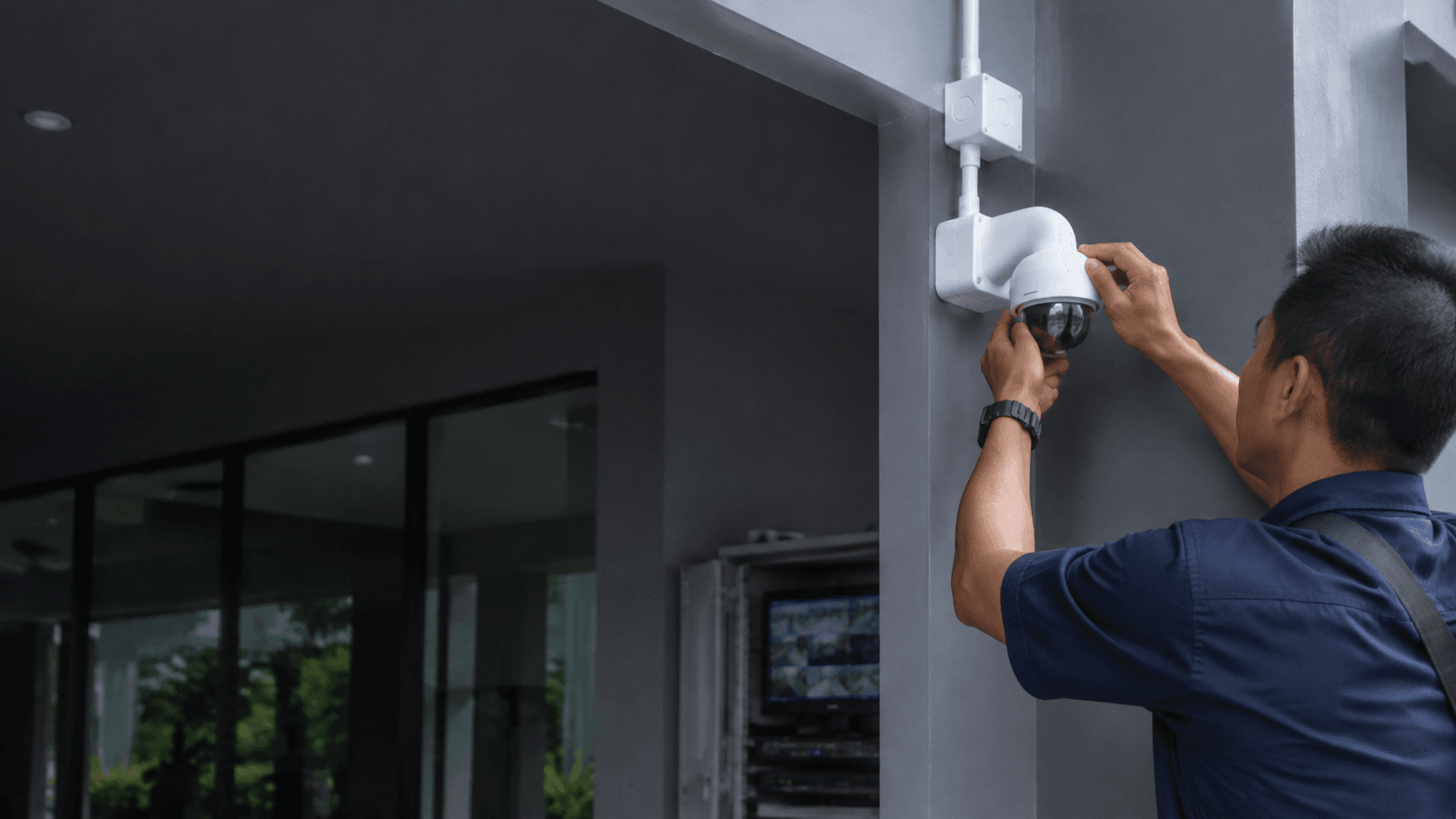
The term covers both older closed-circuit setups and modern IP-based systems where cameras send video across network cabling to a recorder. In Malaysia, the practical questions are usually the same whether the site is a home, a shop, an office, or an industrial building: where cameras go, how footage is stored, and how the system is viewed remotely.
Cctv Network. Cameras, Recording and Remote Viewing
A CCTV network is the connected arrangement of cameras, cabling or wireless links, a recording device, and the software or app used to view footage. Each part affects the others, so a weak link in one area shows up as a problem elsewhere.
Eyonic plans, supplies, and installs monitoring systems with camera placement, recording, and remote viewing for homes, offices, shops, and industrial sites. That scope covers the three elements readers most often ask about: where cameras point, where footage is stored, and how it is accessed after installation.
What a CCTV network includes
Cameras capture the image. A recorder stores it. Connectivity carries the video from camera to recorder and, when remote viewing is configured, from recorder to phone or computer. Power delivery, cabling routes, and the recorder's location all sit inside that chain.
Two common recorder types appear in most discussions. A DVR works with analog-style cameras over coaxial cabling, while an NVR works with IP cameras over network cabling. The choice shapes the cabling, the camera options, and how the system is expanded later.
Camera placement is the decision that most affects whether footage is useful. A camera aimed at the wrong angle records activity without capturing a face, a plate, or a clear sequence of events. Eyonic treats camera placement as a planned step rather than an afterthought, which is why the survey comes before any proposal.
How a CCTV network is planned before installation
Planning starts with the site itself. Entry points, counter areas, corridors, parking, and storage zones each need different coverage. Lighting matters too. Eyonic recommends checking actual lighting conditions before confirming placement for ColorVu-style cameras, because a position that looks adequate in daylight can behave differently at night.
Eyonic's CCTV installation process follows four stages:
- Site survey to review the property, entry points, and existing infrastructure.
- System proposal covering camera positions, recorder, and viewing setup.
- Installation of cameras, cabling, and recording equipment.
- Handover with configuration and a walkthrough of the system.
The survey stage is where constraints surface. Older buildings may lack cable routes. Shops may need coverage that avoids pointing into neighbouring premises. Industrial sites may need cameras in areas where dust, heat, or vibration affect equipment choice. A proposal built without that walkthrough tends to produce either gaps in coverage or cameras in positions that are awkward to maintain.
For larger or public-facing sites, the planning conversation widens. Eyonic completed a project for the Kuching Immigration Office focused on arrival flow, staff areas, visitor movement, and dependable daily operation. That kind of brief is less about camera count and more about which movements need to be visible and how reliably the system runs each day.
Recording, storage and remote viewing
Recording is where a CCTV network either holds up or falls short. The recorder needs enough storage for the retention period the site actually needs, and it needs to sit somewhere with power and ventilation. Footage that overwrites after a few days is of limited use if an incident is only noticed weeks later.
Remote viewing adds convenience but depends on the network connection at the site. Mobile viewing handover is part of Eyonic's basic package scope, which means the app setup is walked through rather than left to the buyer. A system that records correctly but cannot be checked from a phone still leaves the owner dependent on being on site.
NVR setup and remote viewing are listed among Eyonic's services, alongside site survey and camera placement. Keeping those steps with one supplier avoids the situation where the cabling, the recorder, and the app are handled by different parties with no single point of responsibility.
What a CCTV network costs in Malaysia
Cost depends on camera count, recorder capacity, cabling distance, and how much of the work involves existing structures. Eyonic's Hikvision CCTV Package is priced at RM 1,599 and covers camera supply and setup, basic recording configuration, and mobile viewing handover. That tier suits straightforward residential or small commercial coverage.
Larger projects sit in a different range. The Kuching Immigration Office project had an approximate budget of RM 12,000 to RM 28,000. A separate office project for KTA Sarawak Sdn Bhd, covering staff movement, visitor handling, tidy cabling, and clearer daily site control, had an approximate budget of RM 8,000 to RM 18,000. Both figures reflect office-scale work rather than a single-camera installation.
These ranges are useful as reference points, not quotations. A shop with four cameras and short cable runs is a different job from an industrial site needing coverage across multiple buildings. The survey is what turns a range into an actual scope.
Cctv Network questions to settle before installation
Several questions are worth settling before any equipment is ordered. Each one changes the design rather than just the price.
What needs to be seen, and from where? Coverage should follow the movements that matter: entrances, cash handling, stock areas, or vehicle access. A camera count chosen without that list tends to leave the important view uncovered.
How long should footage be kept? Retention drives storage capacity. A site that reviews footage weekly needs less than one that may need to check an incident from a month earlier.
Who will view the system, and how? Remote viewing setup should match the people who will actually use it. If several staff need access, that affects configuration at handover.
What are the lighting conditions at each position? This is where a site visit earns its place. Eyonic's guidance on ColorVu-style cameras is to verify real lighting before confirming placement rather than assuming from a specification.
Who handles the cabling and the recorder location? Tidy cabling and a sensible recorder position affect both reliability and how easy the system is to service later. The KTA Sarawak project brief included tidy cabling as an explicit requirement, which shows it is a planning item rather than a finishing detail.
What happens after handover? Handover should include configuration and a walkthrough. A system handed over without that leaves the owner guessing at basic operation.
Eric Yong, founder of Eyonic Security Systems, has worked in the industry for more than ten years and is experienced in technical installation of digital security solutions for commercial businesses in Sarawak. That background is relevant mainly at the survey stage, where site conditions decide the design.
For readers comparing options, the useful test is whether a supplier walks the site before proposing equipment. A proposal built from a description alone cannot account for cable routes, lighting, or the angles that make footage usable. The four-stage process of survey, proposal, installation, and handover exists to close that gap.
Share your location, property type and required system with Eyonic on WhatsApp at +60 11-5111 7959 for the next practical step.