
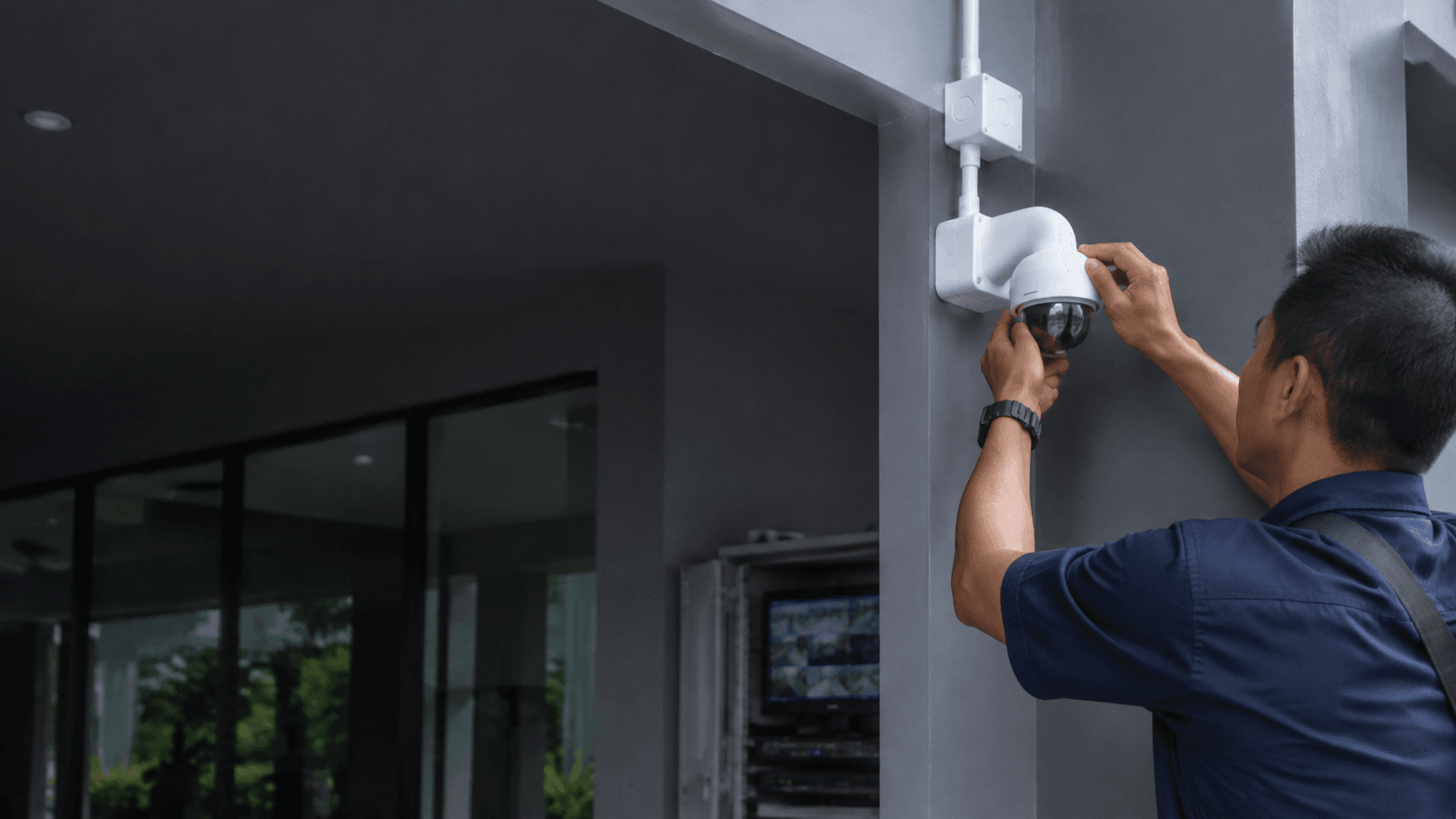
The exact-match query cctv access describes one practical outcome: a person opens a camera feed or a recorded clip from somewhere other than the recorder itself. The method matters less than the chain behind it. A camera has to see the scene, the recorder has to store the footage, the network has to carry the stream, and the viewing device has to authenticate. When any link in that chain is weak, the picture fails at the worst moment.
Eyonic Sdn Bhd plans, supplies, and installs monitoring systems with camera placement, recording, and remote viewing for homes, offices, shops, and industrial sites in Sarawak. The company's own installation sequence runs from site survey to system proposal to installation to handover, which places remote viewing inside the project rather than treating it as an afterthought.
How CCTV access works through a phone app, computer client, or web browser
Three viewing surfaces dominate the market, and each suits a different working habit. A phone app is the fastest route to a live view during a quick check. A computer client suits a desk-bound operator who watches several cameras at once. A web browser needs no installed software, which helps on shared or borrowed machines.
All three depend on the same underlying arrangement. The recorder holds the footage and serves the stream. The viewing device reaches the recorder over the local network or the internet. The user signs in with credentials the recorder recognises. The differences sit in convenience, screen size, and how much configuration each surface demands.
Eyonic's Hikvision CCTV Package at RM 1,599 includes camera supply and setup, basic recording configuration, and mobile viewing handover. That handover step is where a phone app is opened, a live view is confirmed, and the person who will use the system daily sees the feed working before the installer leaves.
Phone app viewing
A phone app is the surface most people reach for first. It travels with the user, works over mobile data, and usually presents a simple camera list. The trade-off is screen size and the difficulty of watching many feeds at once. For a shop owner checking a counter or a homeowner checking a gate, the phone is usually enough.
Computer client viewing
A computer client suits a guard post, a reception desk, or an operations room. A larger screen shows more cameras, and recorded playback is easier to scrub through when reviewing an incident. The constraint is that the machine has to be present, powered, and connected to the same system.
Browser viewing
A browser session avoids installing anything. That helps when a manager needs a quick look from a laptop that is not the usual viewing machine. Browser viewing is the least predictable of the three because it depends on the recorder's web interface and the browser in use, so it is best treated as a convenience rather than the primary route.
What has to be in place before remote viewing works
Remote viewing is not a single setting. It is the end result of several conditions being true at the same time. If one condition fails, the feed does not appear, and the cause is often somewhere other than the phone.
- Site survey to confirm camera positions, cable routes, and where the recorder will sit.
- System proposal covering camera choice, recorder capacity, and the viewing method for the site.
- Installation of cameras, recorder, cabling, and network connection.
- Handover with recording configuration, mobile viewing setup, and a working live view confirmed on the user's device.
The list above is Eyonic's own installation sequence, and remote viewing sits inside the final step rather than after it. A system that records correctly but cannot be reached from a phone has not finished the job.
Network and power conditions
The recorder needs a stable network path and continuous power. A recorder that loses power stops recording and stops serving streams, so the viewing problem and the recording problem arrive together. Where the network is unreliable, the practical answer is often a local viewing arrangement on site plus remote viewing when the connection holds.
Recorder configuration
Recording has to be configured before playback means anything. Basic recording configuration is part of the RM 1,599 Hikvision CCTV Package, which is why the package pairs camera setup with recording setup rather than selling cameras alone. A camera that streams live but stores nothing leaves no footage to review later.
Account and device setup
The viewing device has to be paired with the recorder and signed in. This is the step most likely to be skipped during a rushed installation, and it is the step that determines whether the system is actually usable on a normal working day. Confirming the live view on the user's own phone, not the installer's, closes that gap.
and camera placement under real lighting
Placement decides what the camera can prove. A camera aimed at a bright doorway will silhouette anyone walking through it. A camera aimed at a dark corner will record noise rather than detail. The scene, not the specification sheet, sets the limit.
Eyonic recommends checking actual lighting conditions before confirming placement for ColorVu-style cameras. That check happens on site, at the hours that matter, because a position that looks correct at midday can fail after dark. For a premises that operates at night, the evening view is the one that counts.
Lighting also interacts with access. A feed that is grainy at night is still technically reachable, but it answers fewer questions. Reviewing a recorded clip of an unrecognisable figure is a different experience from reviewing a clip that shows a face or a vehicle plate. Placement and lighting therefore shape the value of remote viewing, not just its availability.
Entrances counters and movement paths
Public-facing sites need coverage of arrival points, staff areas, and visitor movement. Eyonic's project for the Kuching Immigration Office focused on exactly those areas, with dependable daily operation as the goal. That framing is useful for any site where people arrive, wait, and move through a building: the cameras should follow the flow rather than cover empty space.
Where placement and access conflict
A camera position that gives the best view is not always the position with the easiest cable route or the strongest signal. Resolving that conflict is a survey decision. Choosing the convenient position and hoping the picture is good enough usually produces a system that records a lot and proves little.
How Eyonic handles from survey to handover
Eyonic's process treats remote viewing as a deliverable with an owner. The site survey establishes what needs to be seen and where equipment can go. The system proposal sets out the camera and recorder arrangement. Installation puts it in place. Handover confirms recording and mobile viewing on the user's device.
Eric Yong founded Eyonic Security Systems and has worked in the industry for more than ten years, with experience in technical installation of digital security solutions for commercial businesses in Sarawak. That background shapes how the sequence is run: the survey answers questions that a specification alone cannot.
The company's project record shows the same pattern at different scales. The Kuching Immigration Office project carried an approximate budget of RM 12,000 to RM 28,000. The KTA Sarawak Sdn Bhd project, an engineering consultancy office in Kuching, carried an approximate budget of RM 8,000 to RM 18,000 and covered staff movement, visitor handling, tidy cabling, and clearer daily site control. Both are office environments where the viewing arrangement has to survive daily use rather than a demonstration.
What handover should confirm
Handover is complete when the person who will use the system can open a live view without help. That means the app is installed on the right device, the login works, the camera list is correct, and recorded playback has been opened at least once. Anything less leaves the first real incident to be handled by trial and error.
Where the evidence stops
Eyonic's published material does not state which app, client, or browser interface is used for remote viewing, nor which ports, DDNS, or P2P methods apply. It does not publish camera resolution, storage duration, retention period, or bandwidth figures for its packages. Those details belong to the specific system proposed for a site, and they are best confirmed against the actual equipment rather than assumed from a general guide.
questions about cost coverage and daily use
Cost questions usually arrive in two forms: what a package includes, and what a project costs. The Hikvision CCTV Package is RM 1,599 and covers camera supply and setup, basic recording configuration, and mobile viewing handover. Project work is quoted against scope, and the two office projects above show approximate budgets of RM 8,000 to RM 18,000 and RM 12,000 to RM 28,000 for their respective scopes.
Coverage questions are really placement questions. The number of cameras matters less than whether the arrival point, the staff area, and the movement path are each covered by a camera that can see them under the lighting that actually applies. A site with three well-placed cameras can answer more questions than a site with six poorly placed ones.
Daily-use questions tend to be about reliability rather than features. Whether the feed opens on the first attempt, whether recorded footage can be found quickly, and whether the person on shift knows how to check it are the things that decide whether a system gets used. Eyonic's installation services cover CCTV alongside alarm systems, autogate, keyphone intercom, and Starlink internet installation, which means a site with several of those systems can have them planned together rather than as separate visits.
Multiple users and shared access
Eyonic's published material does not cover user permissions, password policy, or multi-user access rules for its installations. Where more than one person needs to view cameras, that requirement should be raised during the survey so the recorder and viewing arrangement can be planned around it. Adding users after handover is possible in most systems, but the cleanest result comes from deciding the access list before installation.
When a feed does not open
A feed that fails to open is usually a network, power, or credential problem rather than a camera fault. The useful first checks are whether the recorder is powered and reachable, whether the viewing device has a working connection, and whether the login details are correct. If those three are sound and the feed still fails, the issue sits in the configuration and needs the installer's attention.
support in Sarawak and across Malaysia
Eyonic Sdn Bhd works from Sarawak and serves homes, offices, shops, and industrial sites. The company's project record includes government and engineering consultancy clients in Kuching, which means the installation approach has been applied to sites where downtime is visible and daily operation matters.
Support is most useful when it is tied to a specific system rather than a general question. A site's camera positions, recorder model, and network arrangement determine what can be checked remotely and what needs a visit. Sharing the location, the property type, and the required system gives a clearer starting point than describing a symptom alone.
For sites in Sarawak and elsewhere in Malaysia, the practical next step is to describe what needs to be seen and where. Share your location, property type and required system with Eyonic on WhatsApp at +60 11-5111 7959 for the next practical step.