
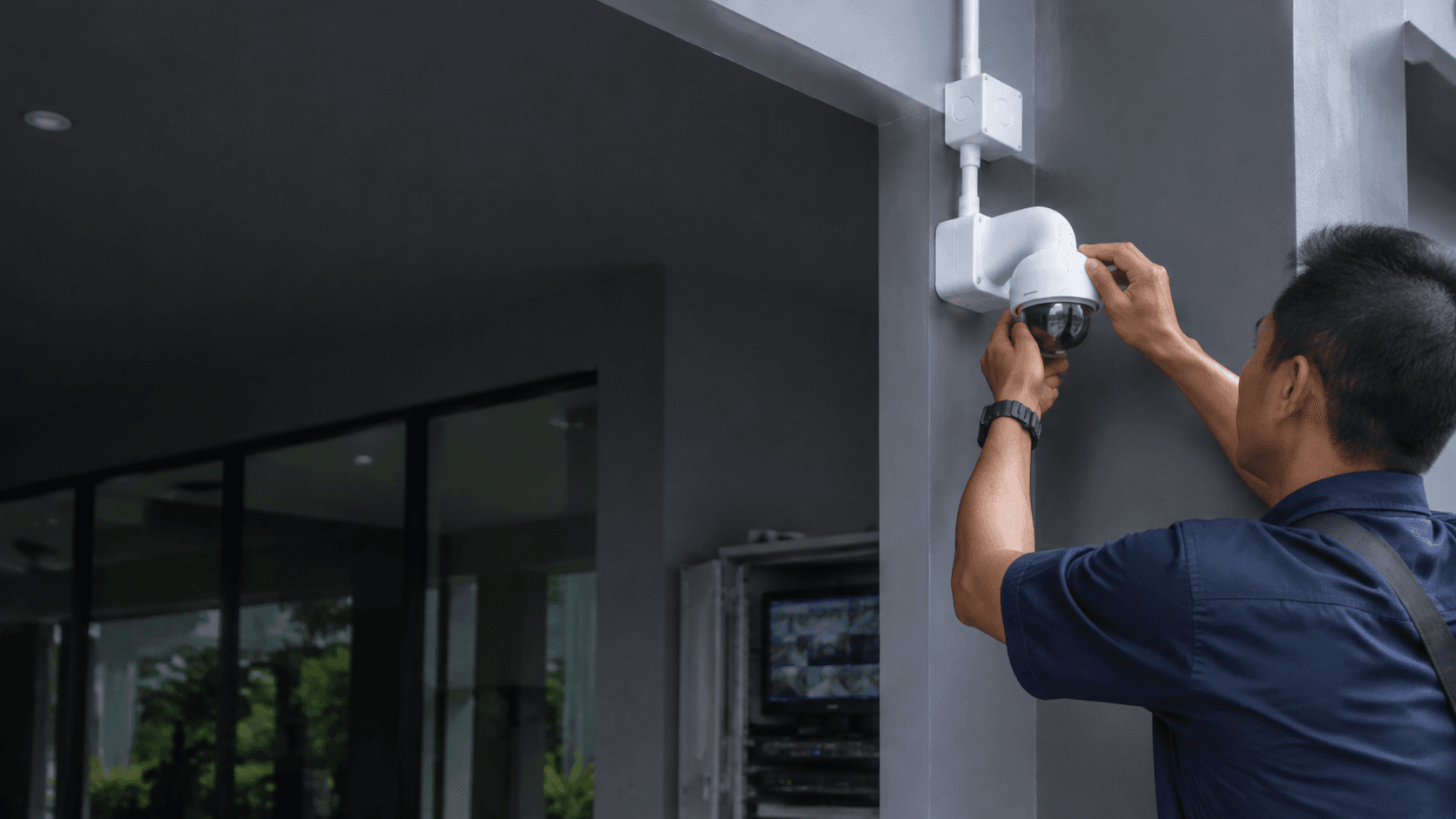
Hikvision Camera. What Matters Before You Choose
Choosing a hikvision camera starts with understanding the difference between network IP cameras and analog HD systems. Network cameras connect to a recorder over Ethernet and support higher resolutions, while analog HD models use coaxial cable and work with a DVR. The right hikvision camera depends on the site layout, lighting conditions, and whether remote viewing is a priority.
The decision sequence below reflects how Eyonic approaches CCTV installations in Sarawak, from initial survey through handover.
- Define the coverage area and the specific activity each camera must monitor, such as entry points, staff zones, or visitor flow.
- Check the actual lighting conditions at each proposed location before confirming placement, especially for ColorVu-style cameras that rely on ambient light.
- Select the camera type and resolution that match the distance and detail required, then confirm the recorder has enough channels and storage.
- Plan cabling routes and network capacity so the system supports continuous recording and remote viewing without bottlenecks.
- Arrange installation and handover with a documented process that includes testing and user guidance.
Choosing the Right Hikvision Camera
The hikvision camera range spans fixed turret, dome, bullet, and PTZ models, each suited to different mounting positions and risk levels. Turret cameras offer a compact profile with fewer blind spots from dust or spider webs, while dome cameras resist vandalism in public areas. Bullet cameras suit long, narrow sightlines where a visible deterrent is useful.
Resolution is the first practical filter. A 2MP camera captures usable detail for doorways and corridors, while 4MP or 8MP models provide clearer images across wider areas. The trade-off is storage. higher resolution consumes more hard drive space per channel, so the recorder capacity must match the retention period required.
Network IP vs Analog HD
Network IP cameras dominate new installations because they support higher resolutions, Power over Ethernet (PoE), and advanced features like motion detection and two-way audio. Analog HD systems remain relevant for upgrading older coaxial infrastructure without rewiring the whole site.
For a hikvision camera to work correctly, the recorder must match the camera type. IP cameras require an NVR, while analog HD cameras require a DVR. Mixing them without the right hybrid recorder creates compatibility problems that surface only after installation.
What Is a Hikvision Camera System?
A complete hikvision camera system includes more than the cameras themselves. The recorder, storage drive, network switch, and cabling all determine whether the footage is reliable and accessible. Eyonic's CCTV installation process covers site survey, system proposal, installation, and handover, which reflects the practical steps needed to move from a camera list to a working system.
The recorder is the central component. An NVR with PoE ports simplifies wiring because each camera receives power and data over a single Ethernet cable. The number of channels must exceed the number of cameras, and the hard drive capacity must support the desired recording days at the chosen resolution.
What Does a Hikvision Camera Cost in Malaysia?
A hikvision camera package from Eyonic starts at RM 1599, which includes the CCTV system components. The total cost rises with the number of cameras, resolution, storage capacity, and installation complexity. For reference, Eyonic's completed projects show approximate budgets of RM 8,000 to RM 18,000 for an office setup and RM 12,000 to RM 28,000 for a larger public office deployment.
These figures illustrate how site size and requirements drive cost. A single camera for a small shop costs far less than a multi-camera system for a government office with multiple zones to monitor.
Practical Considerations for Hikvision Camera Installation
Lighting is the most overlooked factor in camera performance. Eyonic recommends checking actual lighting conditions before confirming placement for ColorVu-style cameras, which produce color footage at night using ambient light rather than infrared. A camera positioned where light levels are too low will deliver poor images regardless of its resolution.
Camera placement should follow the activity being monitored. The Kuching Immigration Office project focused on arrival flow, staff areas, and visitor movement, which required cameras positioned to capture people moving through defined zones rather than a single wide shot. The KTA Sarawak project emphasized staff movement, visitor handling, and tidy cabling, showing that installation quality affects both security and daily operations.
How Many Cameras Does a Property Need
The number of cameras depends on the entry points, the value of what needs protecting, and whether the goal is deterrence or evidence capture. A small office might need four to eight cameras covering entrances, corridors, and the reception area. A larger facility with multiple buildings or parking areas needs more coverage, and the recorder channel count must accommodate future expansion.
What Are the Limitations of a
No camera eliminates the need for physical security measures. A hikvision camera records what happens in its field of view, but blind spots, poor lighting, and network failures create gaps. Storage capacity limits how long footage is retained, and remote viewing depends on a stable internet connection. These constraints should shape expectations before installation rather than after an incident.
Making an Informed Choice About
A hikvision camera is a sound choice when the system is matched to the site conditions and the installation process includes a proper survey. The evidence from Eyonic's projects shows that successful deployments focus on specific monitoring needs, not on buying the highest-resolution camera available.
For a public office like the Kuching Immigration Office, the priority was dependable daily operation across arrival flow and staff areas. For an engineering consultancy, the priority was tidy cabling and clearer site control. Both cases required a site-specific plan rather than a generic camera package.
The practical next step is to define the property type, the areas that need monitoring, and the expected usage pattern. Eyonic's installation process begins with a site survey precisely because camera selection depends on conditions that cannot be assessed from a product catalog alone.
Share the location, property type, and required system with Eyonic on WhatsApp at +60 11-5111 7959 to move from general considerations to a concrete plan for a hikvision camera installation.